Money in our country and around the world
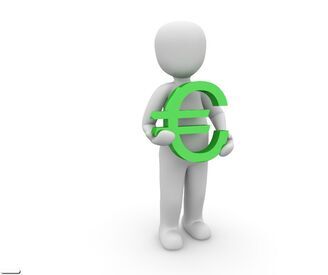
Money has been an inseparable part of human life for centuries. It is a means of exchange—used to purchase goods (like clothes, food, electronics) and services (such as travel, a visit to the dentist, a haircut), but it can also be saved to be used later. Money serves as a way to measure the value of various goods and services, as it allows their prices to be determined and compared.
From Barter to Money
People have always needed to exchange goods with each other in order to obtain what they don’t have but need. In return, they would offer the surplus of the goods they had. For example, someone raises sheep but wants to have a cow, so they offer 5 sheep in exchange for 1 cow. Or another person produces grain but needs more containers to store it. Therefore, they offer the potter 3 sacks of grain for 2 of his large clay jars. It is believed that this form of exchange, called barter, precedes the appearance of money.
However, barter is associated with many inconveniences because people’s needs must match—for example, the person with the sheep must want a cow, and the other person must be willing to accept 5 sheep in exchange. They also have to agree that the value of the five sheep equals one cow. Since in real life this is not always easy, people began to look for other solutions. Eventually, they started exchanging all kinds of goods for one single item that everyone accepted as valuable.
Different goods have played this role across the world—since ancient times, livestock was used as a means of exchange almost everywhere, as well as salt. The list of items that different tribes and peoples have used as a medium of exchange is long—foods (rice, dried fish, tea, cocoa beans), or items used for decoration or rituals (shells, snail shells, beadwork from mollusk shells). Metals such as iron, bronze, copper, and silver became the most preferred as they retained their value over time and were accepted by more people. The metal that gained the highest value among all known metals was gold. Even today, when gold is mostly used for jewelry or as a special material in some advanced technologies, it remains a desirable asset.
But even this method of exchange had its inconveniences, because the chosen item needed to be not only valuable to everyone but also durable and easy to carry and divide. Gradually, this led to the emergence of money.
The first money, in the form of coins made from a natural alloy of gold and silver, appeared in the mid-6th century BC in Lydia (on the territory of present-day Turkey). The idea of this new means of exchange quickly spread among ancient peoples—such as the Greeks and Romans, who also began to mint and use coins. Money made trade between different, even distant peoples easier, and trade flourished rapidly.
Even more convenient and lighter to carry than coins were paper banknotes, which first appeared in China in the 7th century. Early banknotes were simply receipts for a given amount of money because silver and copper were heavy to carry. In the 12th century, the state officially began printing banknotes valid throughout the country. Paper money was introduced in Europe in the 17th century.
Money Today
Today, money exists not only as banknotes and coins, but in many different forms. This is due to the advancement of information technologies and their integration into daily life.
If your money is deposited in a bank account, you will only see it as numbers—such as when you log into your bank’s mobile app. Even though you cannot touch it, your money exists and you can use it.
Some forms of money are more secure than others. Cash can be lost or stolen. If kept at home, it can be destroyed by fire or flooding. However, if your money is in a bank, it is in a safer place and is protected by law up to a certain amount.
Currencies
Each country typically has its own currency — this is its official monetary unit. In Bulgaria, until 31.12.2025 this was the lev, from 01.01.2026 the official currency in the country became the euro; in the USA—the dollar; in Japan—the yen. Some currencies are used in more than one country, as is the case with the euro, which is used by most countries in the European Union. Sometimes, currencies are changed. For example, when a country in the EU adopts the euro, it stops using its previous national currency.
A country's currency is its legal tender, meaning that the state accepts that money for payments within the country. However, if the currency cannot be used in another country, when you travel abroad, you need to exchange your home currency for the currency of the destination country. If you pay by card or withdraw money from an ATM, your money will be automatically converted. The exchange rate shows how much of the other currency you will get. The exchange rate calculates how many units of one currency are equal to one unit of another. For example, if 1 unit of currency X equals 2 units of currency Y, then to buy 10 units of X, you must give 20 units of Y. This rate can change every day.
There are various places where you can exchange currency, and banks are generally the most secure. Exchange offices usually offer a better rate than banks, but you must be careful to ensure they are legally registered. Currency can also be exchanged at hotels or airports, which is convenient for tourists, but often the rate is not as favorable. It’s important to check whether a commission fee is charged for the exchange—this is an additional amount paid to the office for the service—and always request a receipt.
Why Is It Important to Understand Money and Currencies?
It is extremely important for everyone to understand what money is, how it is stored, how it is used, and how it is exchanged. The earlier you start learning about these topics, the more confident you will be in the future—when you start earning and managing your own money.
 This article has been prepared with the support of the OECD, as part of the project "Strengthening the Capacity for Implementation of the National Financial Literacy Strategy", funded by the EU through the Technical Support Instrument. This material is for informational and educational purpose only. It does not constitute investment advice, a recommendation or offer to buy or sell financial instruments, or the provision of any other type of investment services. More information can be found here.
Useful instruments
Glossary
Partners