Travel and finances
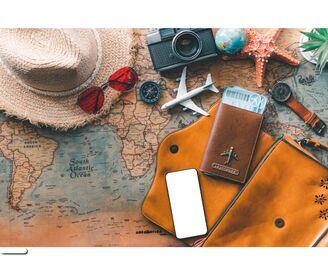
The opportunity to travel has long been regarded as a fundamental human right, and whether we can afford at least a week of vacation per year is often seen as a symbol of financial well-being. For some, vacation means setting aside a significant portion of their monthly income, while others manage to travel with very modest means. While it’s true that comfortable travel and rest cost money, a carefree experience does not necessarily have to be expensive for you to feel relaxed and refreshed.
Planning the trip
The most important thing you should start with is good planning – this way, you will avoid unnecessary expenses and headaches. How do you create your vacation budget? Generally, there are two main models: trips organized by a provider and those you arrange yourself. In the first case, the expenses are predominantly fixed and clear at the time of choosing a travel offer, which usually includes accommodation, often meals, and transport. In this case, your main focus would be allocating funds for daily expenses. In the second case, when you organize most things yourself, more thorough research and planning will be required. It is advisable to set an approximate amount for travel and accommodation and look for offers within that range.
In recent years, platforms for self-organized accommodation have become increasingly popular. Through them, you can rent an apartment, a house, or even just a single room. Whether this is a more budget-friendly option than a hotel accommodation depends on the specific offers and your personal situation. For example, if you are a group of 5–6 people, it will probably be more cost-effective to rent an apartment with enough bedrooms than to book separate rooms in a hotel.
Set aside a budget for meals, souvenirs, tips, and entertainment. Based on your estimates, create a budget and commit to sticking to it.
Booking early with a pre-paid package still offers good value. At the same time, many accommodation providers offer “last-minute” deals, which can sometimes be cheaper than early bookings. For “last-minute” deals, however, it is important to check whether all services are included or whether you will need to organize transport yourself, for example. Of course, with this option, you must have a sufficiently flexible personal schedule.
Eating expenses can be significant. Families with children often choose all-inclusive packages for convenience and food variety. Half-board options are also offered – for example, only breakfast and dinner. It is a good idea to read online reviews about the quality of the food provided at the hotel so that you do not end up paying once for it and a second time for lunches and dinners elsewhere. Also, consider your personal habits and preferences. If you spend all day outside and enjoy dining at local restaurants, pre-paying for hotel meals is unnecessary. It may sound simple, but many people feel the need to “secure” themselves and end up with double expenses.
Payments while travelling
Travelling in most countries around the world no longer requires carrying cash. It is sufficient to take a small amount of local currency and check the conditions for using your credit and debit cards. Cards issued by Bulgarian banks support payment without restrictions and fees in EU countries and most countries worldwide where major card operators are present. Check whether your card comes with additional services, such as insurance against unauthorised use by third parties or travel insurance, and look into their conditions. Also, check your card’s expiry date so you do not find yourself without access to your funds while travelling. If you use a mobile app for payments, review the roaming conditions as well.
You should know that withdrawing money from an ATM abroad with your Bulgarian card can be expensive, so check the conditions for the specific country in advance. If you are going to a place with limited card payment options, it is better to carry a certain amount in cash and check whether there are local ATMs and exchange offices available. Another convenient option is using various apps and platforms for payments and transfers via phone, provided that you have internet access.
Transport matters
When travelling by car, consider your safety on the road – prepare the vehicle for a long trip and check its technical condition. This will reduce the risk of unexpected breakdowns and avoid unnecessary, often significant, repair costs. Another important issue is motor insurance. By default, your vehicle should have compulsory Motor Third Party Liability Insurance , which allows you to travel in all EU and European Economic Area countries, as well as in third countries that are parties to the Multilateral Agreement of the Green Card system . A Green Card Certificate is issued along with your motor insurance policy, which you must present when travelling to countries outside the European Economic Area, such as Turkey. If you are travelling to other countries, be sure to check the entry requirements for vehicles. You can find more information about motor insurance and how it can help you here .
Before departure, pack your luggage – if you are flying, you will probably have size and weight limits, so get acquainted with the airline’s rules in advance. Otherwise, you may have to pay a hefty fee for excess baggage or even leave some of it behind.
An unforeseen expense may also be border restrictions on products – bringing food, seeds, and similar items from Bulgaria to countries outside the EU may at the very least result in their confiscation, and in some cases, fines. You are better off investing this money in experiences at your destination.
Protection from unfavorable situations
Once you have planned the travel and accommodation, you should also think about how to protect yourself against possible unfavorable scenarios such as unexpected health issues, lost luggage, and more.
- European Health Insurance Card
A completely free option for securing yourself in case of emergency medical issues while travelling in Europe is the European Health Insurance Card . In case of need for medical assistance, it provides you access to public healthcare services during a temporary stay in one of the 27 EU countries, Iceland, Liechtenstein, Norway, and Switzerland. It is provided under the same conditions and at the same cost (free in some countries) as for health insured individuals in the respective country. The European Health Insurance Card is issued by the National Health Insurance Fund , and the requirement is that you are insured and have not interrupted your health insurance payments for a period longer than 3 months during the past 36 months. You should know that this card does not guarantee free healthcare. Due to differences in health insurance systems, some services that are free in Bulgaria may be paid in another country. It does not cover private healthcare or expenses such as return flights home or lost/stolen belongings.
More comprehensive protection is offered by insurance products, and there are different options available for both travel abroad and tourism within Bulgaria. In organised trips, insurance is usually included in the travel package, but it is recommended that you familiarize yourself with the conditions, the covered risks, and the coverage limits.
- Travel Assistance Insurance
The travel assistance insurance is specifically designed to cover medical expenses resulting from an accident or sudden acute illness while travelling abroad. Insurance companies have contracts with assistance companies that provide 24-hour assistance and direct clients to suitable medical facilities, arrange medical transportation, repatriation, and more. Various options are available on the market, and it is important to pay attention to both the coverages and the insured sums for the different risks. The basic coverage is for medical expenses due to acute illness/accident, but you can add additional coverages – emergency dental care, complications of chronic conditions, pregnancy, lost luggage, trip cancellation, and others. There are also options for covering the risk of temporary or permanent disability resulting from an event that occurred during the trip. When purchasing the insurance, you must state the destination and whether the trip involves engaging in extreme sports, as these factors are considered in calculating the premium.
- Tourist/Mountain Insurance for Bulgaria
Every year, there are cases of injured tourists in the mountains, and rescue operations are usually expensive. In the absence of insurance, the costs are borne by the rescued individuals. Therefore, regardless of whether it is a hike, holiday, or sport, it is wise to have tourist/mountain insurance. Various options are offered on the market, and in general, the coverages include emergency medical care due to accident, rescue operation, assistance in case of an accident, and primary medical care in the mountains. These can be supplemented with additional risks depending on the specific product – for example, emergency dental care, acute illness, baggage theft, and other unforeseen circumstances. If you engage in extreme sports, you should add extra coverage for that or purchase specialized insurance. You can choose the insurance period based on your personal circumstances – from a few days to one year.
Regardless of the destination, the rules are universal – good planning, appropriate insurance, and only the necessary luggage. This way, you will enjoy your trip with minimal unnecessary expenses and headaches.
Useful links :
National Health Insurance Fund
 This article has been prepared with the support of the OECD, as part of the project "Strengthening the Capacity for Implementation of the National Financial Literacy Strategy", funded by the EU through the Technical Support Instrument. This material is for informational and educational purpose only. It does not constitute investment advice, a recommendation or offer to buy or sell financial instruments, or the provision of any other type of investment services. More information can be found here.
Useful instruments
Glossary
Partners