I make my own budget
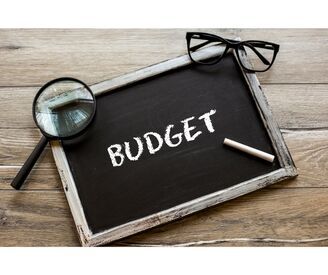
Budgets can be made for different periods of time – a week, a month, a year. There are also budgets for specific events. For example, if you have a prom coming up, it’s a good idea to plan with your family how much money is reasonable to allocate for this and where it will come from. Don’t forget your contribution!
Here are a few easy steps you can follow to make your monthly budget:
1. Write down your income
Describe all your income that you expect to receive for the month, by source. When making a budget for an event or a larger purchase, savings from a previous period can be used as a source of funds, and you can add them to this category accordingly.
2. Write down your expenses
Make a list of everything you spend on – food, clothes, entertainment, transportation, etc. When describing your expenses, it is very important to distinguish your needs and wants .
Go back through your list and highlight everything you absolutely need, i.e. identify your needs. The rest of the things on your list can be defined as wants.
3. Set savings goals
Experts advise saving regularly. The purpose of savings can be different - to deal with unforeseen situations, for a larger purchase, for additional income after retirement, or something else.
Keep in mind that even at this stage of your life, it is good to have savings for unforeseen situations. So it is never too early to start creating your own emergency fund .
Save regularly and you will gradually accumulate the necessary funds to achieve the goals related to your needs and wants.
Although you do not spend the money you save, the place of savings is in the expenditure section of your budget. Why is this so? Because they will still be spent, but in the future. When you decide to use these funds, they will appear again in your budget as a source of funds.
4. Allocate your expenses to your income
A basic principle of budgeting is that expenses should not exceed income.
You know what your income is for the month and have a list of your needs and wants, so you can proceed to draw up your monthly budget. This is the point at which you first determine what percentage of your income you will save. Set aside these funds as soon as you receive them. This approach to managing personal finances is known by the expression “ pay yourself first ”.
One tip for budget allocation that financial experts often give to adults is the 50/30/20 rule. This means allocating 50% of your income to needs, 30% - to wants, and 20% - to savings. Other experts advise saving at least 10% of your income. For people with the lowest incomes, this can be a serious challenge, as their expenses for necessities usually take up a significantly higher share of their income, wants are minimized, and no funds are set aside for savings. This makes these households unprepared to meet even minor unforeseen expenses. To avoid this, despite the restrictions, funds should be regularly set aside for savings, even if it is a very low percentage of income – 5% or 2%. It is also possible to save a certain amount, but its size should be revised when income changes significantly.
Of course, the incomes of working adults with families are higher than yours, but, on the other hand, they also have many more mandatory expenses for maintaining the household, such as rent, loan installments, overheads, etc. As income increases, the price of wants often increases – they become more luxurious and expensive, such as vacations to exotic places or a high class car. Older adults also set aside larger amounts for savings and investments to cover unforeseen expenses, as well as to secure higher incomes after retirement.
Although in practice your needs, such as food, clothing, housing, medical care, education, are often covered by the adults in your family, try to apply the 50/30/20 rule to your personal budget. If your income is lower, adapt the rule and set aside, for example, 10% or less for savings to be able to meet your needs. The rule you will adhere to will help you have a clear idea of what funds you have, and you will be able to easily monitor what you spend your money on. And when you move on to the next stage of your life - for example, continuing your education at university, starting a job or living independently, these skills will be very useful to you.
Once you have determined the percentage for savings, you can proceed to allocate funds to your needs and wants. Add up the value of all your expenses and compare them with your income. Do you have enough income to cover everything?
It is understandable that needs are more important than wants, and when you allocate your funds to different budget items , you should first budget/provide money for them. Be careful with the amounts for your wants and assess which of them you can actually afford.
The important thing is to be wise when determining the funds for your needs and wants. Or as people say: “To live within your means”.
If your income is not enough for all the expenses you initially planned, you can approach this in two ways. One is to limit your expenses by reviewing and reducing your wants first. The other is to look for an additional source of income especially if you do not have enough funds for your needs.
5. Monitor your budget
Record what you have spent each month and monitor whether you are sticking to your planned expenses. As your needs and wants change, your budget will also change. Therefore, periodically review it and adjust it if necessary.
Check out some tips that can help you with budgeting:
Budgeting Tips
- Plan your expenses carefully! Remember that you should save first, then cover your needs, and then your wants.
- Create a clear budget, following a rule that suits you for allocating funds to savings, needs, and wants. Start with small savings goals, but stick to them!
- Stick to your budget as closely as possible. Regularly monitor your expenses, but be flexible and adjust your budget if necessary.
- Use a budgeting app – with its help, it will be much easier for you to create and track your budget.
 This article has been prepared with the support of the OECD, as part of the project "Strengthening the Capacity for Implementation of the National Financial Literacy Strategy", funded by the EU through the Technical Support Instrument. This material is for informational and educational purpose only. It does not constitute investment advice, a recommendation or offer to buy or sell financial instruments, or the provision of any other type of investment services. More information can be found here.
Useful instruments
Glossary
Partners