Mortgage loans
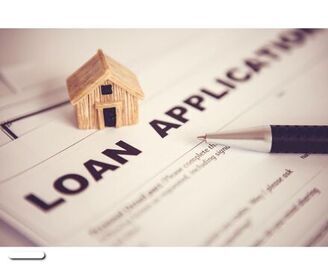
Building a home is one of the most important life goals, but its implementation requires significant financial resources, which people generally do not have. Therefore, it is normal practice to seek loans from credit institutions to finance the undertaking - mortgage or housing loans. This type of loan, in addition to purchasing or building a home, can also be used for other purposes - repairing real estate, refinancing, even to cover current needs.
Their provision is regulated in the Consumer Credits Related to Immovable Property Act. They are granted by banks and non-bank financial institutions, whose activities are regulated in the Credit Institutions Act.
Mortgage/housing loans are large in size and long-term, which means making a serious financial commitment for many years to come. Therefore, their withdrawal should only be made based on careful planning and a realistic assessment of your financial situation and prospects. A responsible attitude and informed choice are prerequisites for successfully achieving your financial goals related to borrowed funds.
Mortgage and housing loan
There is no specific distinction in the legislation between a “mortgage loan” and a “housing loan” - in both cases, a mortgage is established, i.e. a property right over real estate, so that it can be used as collateral for future receivables by the creditor . However, in practice, some specifics have emerged related to the purpose of the loan and the collateral. It is assumed that in housing loans, the funds granted are used for the acquisition or construction of a home, which is mortgaged in favor of the creditor. In the case of mortgage loans, the funds can be granted against a pledge on already owned real estate, which may not be residential, and the funds are used for various purposes.
Preliminary information on mortgage/housing loans
For an initial orientation among the market offers, you can use the general information on mortgage loans provided by the lender and/or credit intermediary . It includes the main parameters of the offered product and a representative example of the total loan amount, the total costs of the loan for the consumer, the total amount owed by the consumer, and the APR on the loan.
But for the comparison between the offers to be truly objective, the information on the loan must be personalized and reflect your borrower profile and specific financing needs. Such is the pre-contractual information, which is mandatory provided by lenders and is in a standardized form - the Standard European Form ( Standard European Consumer Credit Information Form [1] ). It contains all the main parameters of the mortgage loan, including the total amount ( principal ), term, currency, type and amount of the interest rate , Annual Percentage Rate of Charge (APR) , collateral in the form of a mortgage, the total amount owed, method of loan utilization and repayment, additional taxes , insurance , notary fees , and others. This standardized information provides transparency, makes it easier to compare offers and helps you make an informed decision.
Basic steps in granting a mortgage loan
- When submitting a request/application for a mortgage loan, a preliminary assessment of your creditworthiness is made to determine whether you meet the requirements for obtaining a loan and what financing conditions can be offered to you based on your income, expenses and other financial obligations. You need to provide the documents requested by the lender and provide correct information about your income, including its origin, and other personal circumstances. The lender provides you with personalized information about the loan in the form of a Standard European Form. Keep in mind that the credit institution has the right to refuse to grant you a loan.
- If you receive preliminary approval from the lender, a more detailed study of your application is carried out. Additional documents are required, usually related to your financial and family situation, in order to refine the assessment of your creditworthiness, as well as related to the property that will be the subject of the mortgage. A legal check and valuation of the property is carried out.
- Upon final approval of your application, the credit institution will send you a binding offer in the form of a draft contract, including all individually agreed terms between the parties. A Standard European Form is also provided if there are differences in the terms of the offer compared to the previously provided information or if the form was not provided in advance. After receiving the documents, you have a 14-day cooling-off period during which you can decide whether to conclude the contract.
- Carefully familiarize yourself with all the details and conditions in your proposed contract. You have the right to request clarification from the creditor and/or credit intermediary not only at this, but also at all previous stages of granting the loan.
- You should proceed to signing the contract after carefully considering all aspects of the contract and the commitment you make with it. After concluding the contract, a mortgage is established in favor of the creditor, the property is insured and then you draw down the loan amount.
In connection with the mortgage loan, there are a number of costs to anticipate – fees for various services such as document review, collateral valuation, legal due diligence. Property insurance for the mortgaged property is mandatory and, in general, life insurance for the borrower. Some of these fees are included in the APR, but others are not – such as notary fees, registration fees for the transfer of ownership of real estate and the costs that the consumer pays in the event of non-fulfillment of his obligations under the loan agreement. Check carefully which costs are included in the APR when comparing offers.
Early repayment of a mortgage/housing loan
You have the legal right to repay your loan in full or in part early, for which purpose you must submit an application to the lender and conclude an annex to the contract. You do not owe a penalty or fee for early repayment/compensation if you have paid at least 12 monthly installments, even if the loan has a fixed interest rate. For fewer installments, the lender is entitled to compensation of up to 1% of the early repayment amount if there is more than 1 year left until the end of the loan term, and 0.5% if there is less than 1 year left.
By early repayment of the loan, you practically reduce the total amount due on the loan, as you save the interest that you would have paid on the early repayment amount on the principal. When you decide to repay part of your loan early, it is a good idea to consider and calculate the optimal option for you - whether to reduce the amount of the monthly installments by repaying part of the principal or to keep them the same by shortening the term of the contract.
Careful planning and management of the loan is key
With a mortgage loan, you are making a significant and long-term financial commitment. There are also potential risks - in the event of default, the lender has the right to take action to collect the debt, including selling the mortgaged property. When negotiating the loan, you will have the opportunity to choose between limited and unlimited liability. In the first case, you are responsible for the obligation only with the specific mortgaged property, while in the unlimited case - with all your property. The lender takes a lower risk if the liability is unlimited, so in this case he will offer you a much better interest rate and conditions in general.
It is a good idea to set aside funds in the amount of at least several installments to insure yourself in case of temporary financial difficulties. If such arise or are expected, do not hesitate to discuss the situation with the lender, and before you fall into default. Look for possible solutions – for example, renegotiating the term of the loan in order to reduce the monthly installments, agreeing on a grace period on the principal, i.e. you do not pay repayment installments, but only the interest. Keep an eye on market conditions and, when they are favorable, look for opportunities to renegotiate and refinance the loan in order to reduce your costs.
Useful links:
Law on Real Estate Loans for Consumers
[1] https://europa.eu/youreurope/citizens/consumers/financial-products-and-services/consumer-credits-and-loans/index_en.htm
 This article has been prepared with the support of the OECD, as part of the project "Strengthening the Capacity for Implementation of the National Financial Literacy Strategy", funded by the EU through the Technical Support Instrument. This material is for informational and educational purpose only. It does not constitute investment advice, a recommendation or offer to buy or sell financial instruments, or the provision of any other type of investment services. More information can be found here.
Useful instruments
Glossary
Partners