Types of financial frauds
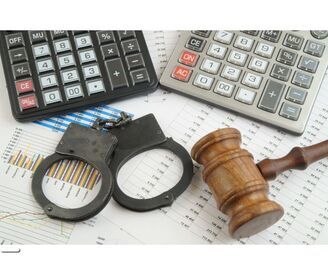
What are the most common financial frauds and how to protect yourself from them?
In today's world, consumers have easy and quick access to a variety of financial and payment products and solutions. This dynamic environment creates new opportunities for people but also brings new security risks. The spectrum of financial fraudulent practices is wide and develops along with current market and technological trends. Therefore, it is particularly important for consumers to be informed about the risks, to recognize fraud mechanisms and to know how to protect themselves.
It is a challenge to describe all existing fraudulent schemes, but here are some of the most common:
Fraudulent investment schemes
Investment frauds are often associated with lucrative investment opportunities, such as stocks , bonds , cryptocurrencies , gold , diamonds, investments in land and/or real estate , and many others.
Although diverse, at the heart of all investment fraud is a “bait” – a promise of very high returns , achievable in a short time with minimal or no risk. Common examples are frauds based on Ponzi schemes and pyramid schemes , high-yield investment programs (HYIP) , and advance fee fraud .
How to protect yourself?
First of all, be especially cautious if you receive a tempting offer to get rich, accompanied by pressure to make a quick decision and evasive provision of information. Carefully check the investment opportunity, the companies and individuals offering it. Check the website of the Financial Supervision Commission (FSC) or the mobile application FSC mobile , where lists of Investment Firms (Bulgarian and from EU countries) licensed to operate in Bulgaria, Management Companies , and Alternative Investment Fund Managers are published. The FSC approved prospectuses of issuers – companies that publicly offer securities issued by them, are also available there. If you have information about the existence of a fraudulent investment scheme or have been a victim, file a report with the FSC , law enforcement agencies and/or the prosecutor's office.
Personal data fraud and identity theft
This type of fraud is based on the illegal acquisition of personal data and financial information. It is used to commit a wide range of financial fraud and abuse - draining accounts and cards, shopping online, applying for and obtaining credit in someone else's name, and others. The methods by which criminals obtain personal information range from physical theft of identity documents and payment cards to breaches in electronic databases, email fraud, links to fake sites and documents, SMS messages, phone calls, etc.
How to protect yourself?
Keep your personal documents and payment cards in a safe place. Do not provide personal data, usernames, passwords, account numbers, payment card details - PIN codes, CVV/CVC of cards, passwords for accessing electronic banking, etc. to other persons, regardless of the way in which they are requested from you - by phone or email. You should know that legitimate financial institutions will never ask you to provide or confirm personal data and passwords by email, via a link in a message, by phone. If you find that documents are missing, the police should be immediately notified, as well as the payment service provider.
Follow the basic security rules for online financial transactions (more information on the topic could be found here ) and monitor your payments. If you detect an unauthorized operation, immediately notify your bank or other payment service provider. In the event of fraud with your personal data, file a report with the Commission for Personal Data Protection and law enforcement agencies.
Payment card fraud and ATM fraud
Payment card fraud can occur in many ways – when making purchases at POS terminals operated by unscrupulous merchants, by illegally copying data (skimming) when using an ATM , by using a lost or stolen card, etc. Criminals can trick individuals into providing their card information in communication by phone or email. All cards issued by Bulgarian payment service providers have both a magnetic stripe and a chip, which makes skimming practically impossible as a method of fraud.
How to protect yourself?
To reduce the risk, always keep your card in front of you while using it and cover the ATM keypad with your hand when entering your PIN code.
Before using an ATM, inspect it for any unusual, additional devices or cameras – they can be used to capture card data. If you notice anything suspicious, look for another one. It is always safer to choose ATMs that are located inside the bank, rather than on the street. Do not carry passwords with your card. It is highly recommended that you remember them or at least keep them in a place different from where you keep your credit or debit cards.
Payment service providers offer their customers a notification subscription (via mobile application, SMS, Viber, e-mail, etc.) when performing a successful/unsuccessful operation with their payment card. Take advantage of this service - this way you will be able to immediately react to any unusual action and immediately notify your payment service provider.
If your card is lost or stolen, call the 24-hour assistance hotlines of your bank/payment service provider to block your card in a timely manner. Do not provide any data about your card to third parties, especially by phone or email.
Employees at retail outlets are not allowed to record data from your card.
Frauds when using payment services in a digital environment (electronic banking, online shopping, etc.)
In general, they are based on offering particularly attractive offers for goods and services. After the purchase is made, the goods either do not arrive or are fake. Among the fraudulent practices is the use of phishing emails or fake advertisements in order to obtain personal data and financial information, such as the buyer's payment card. There are also fraudulent websites through which card data are stolen when the card is used to make a purchase on the relevant site. Another common type of fraud is a message from a fictitious buyer who ostensibly wants to purchase second-hand items sold on specialized platforms on the Internet. The fraudster offers to "pay" the price directly to the seller's payment card through the intermediary of a courier, and for this purpose, sends a fake link in which the seller enters his card data, as well as passwords and codes. Instead of receiving the funds for the item being sold, the seller actually makes a payment to an account controlled by the fraudster.
How to protect yourself?
Choose shopping sites (e-shops) that are included in the programs for secure payments with payment cards of international card schemes. It is safest to shop on familiar online shopping sites, and check new sites carefully. Pay attention to the policies for privacy and protection of personal data, for delivery and return of goods, and payment methods. Look for reviews from other users about their experience with the online merchant on reliable sites.
When selling your items online, never accept payment directly to your card. If you want to use cash on delivery, you should provide the courier company with your account number so that you can receive the payment after the item has been delivered.
When payments are made with a payment card, it is safer to use the so-called virtual card . It is funded with the amount needed only for the respective purchase. This way, malicious merchants or hackers will not have access to the actual account and the funds on it.
Emotion-based scams
There are many variations of this type of scam – romantic, related to appeals for donations or emergency help for a loved one supposedly in trouble. What they have in common is that scammers take advantage of normal human emotions to get large sums of money from their victims.
Romance scams most often start on dating applications or social networks. Scammers create fake profiles and build relationships with their victims, often over a long period of time. Once trust is established, they begin asking for money for fictional emergencies, travel expenses or medical expenses, sometimes draining the victim’s savings before disappearing.
To protect yourself, when dating online, do a thorough identity check. Never send money or provide financial information to someone you haven’t met in person. It is also wise to look for the photos in the person's profile and, through a reverse image search, check whether they are really theirs, as well as when and by whom they were first published on the Internet. You can easily do this using the GOOGLE search engine, but there are other online tools for this purpose.
In telephone scams , criminals call victims with claims that a loved one is in trouble and that they urgently need funds to help. Fraudsters most often pretend to be police officers, government officials or doctors in order to install trust. If you receive such a call, you must first try to contact your loved one to personally verify their condition. If you have even the slightest doubt, report it to the law enforcement agencies. Of course, in such situations, never give money to strangers, regardless of the capacity in which they present themselves to you.
Useful links:
Financial Supervision Commission
Commission for Personal Data Protection
 This article has been prepared with the support of the OECD, as part of the project "Strengthening the Capacity for Implementation of the National Financial Literacy Strategy", funded by the EU through the Technical Support Instrument. This material is for informational and educational purpose only. It does not constitute investment advice, a recommendation or offer to buy or sell financial instruments, or the provision of any other type of investment services. More information can be found here.
Useful instruments
Glossary
Partners