Origin of money
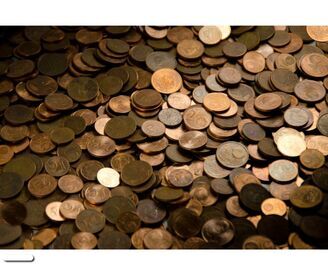
Money is such an integral part of everyone's daily life that it is often taken for granted. It occupies a central place in the management of personal finances. There are different views on the origin and development of money. At first glance, they are too theoretical, and the practical benefit of knowing them is limited. By answering the questions of what money is and what its functions are, they actually explain how the economy works and what decisions people should make with their limited resources, and also what money is today and what its future holds.
Barter Theory
Barter theory is supported by economists and is considered classical. In order to talk about an economy at all, there must be exchange. Exchange, in turn, is possible only when people have both a surplus of something and a shortage of something else. Then they will be inclined to exchange the surplus for something to satisfy the shortage.
The barter theory holds that money arose as a solution to the problems that natural exchange posed for people. Barter is the exchange of goods for goods. It is something that is often found today - for example, with cars, real estate, luxury goods such as watches, etc. It is assumed that at the beginning of the development of economies, each person offered a surplus of goods that he himself produced or acquired (e.g. by catching).
In order for exchange to occur, a counter-matching of needs was necessary. If Ivan offers sheep that he raised, and George offers barley, then Ivan must need barley, and George must need sheep. The second problem is related to the divisibility of goods. Ivan needs only 25 kilograms of barley, but is willing to exchange a sheep for no less than 50 kg. The third problem is the storage of value. If Ivan is still willing to exchange a sheep for 50 kg of barley, then the remaining 25 kg, which are currently unnecessary to him, will lose their qualities and, accordingly, their value. A fourth problem arises: Todor raises pigs and is willing to exchange two of them for one sheep or one for 20 kg of barley. But according to Ivan, one sheep is worth 50 kg of barley, i.e. one pig should be worth 25 kg. The challenge is that there is no universal measure of value that can be used by everyone.
Now imagine how the relations in this economy would be confused if there were hundreds of producers and thousands of goods offered. For this reason, universal goods appear - for example, salt. It is extremely divisible. Moreover, it is not only durable, but is even used to preserve other goods. In turn, this makes it something that everyone seeks. Thus, it performs two main functions that characterize money: a universal medium of exchange and a store of value. Since everyone begins to use salt as an intermediate means, it also becomes a universal measure of value - the third important function of money.
But why don't we still use salt today? First of all, its value is not high. Imagine how many tons of salt you need to exchange for a car. And how would you transport it? There are other disadvantages: it has to be mined, which takes time and resources. In addition, it is difficult to store - it can get wet, it can spill, it can be blown away by the wind, etc.
Other universal goods are established - pieces of precious metals such as gold, copper, silver. They are also not convenient - you have to find out the sample (content) of the metal every time. The weight is not standardized - it has to be weighed, cut, etc. every time, which slows down the exchange and creates a risk of fraud. Therefore, at a certain point, the minting of coins begins. They have a certain standard - weight and sample, which makes it easier to measure the exact amount.
People accumulate wealth in the form of gold, silver, and copper in coins. However, this carries the risk of theft, requires a place and conditions for storage, etc. Therefore, people begin to store their wealth in the prototypes of modern banks. They deposited their coins with money changers, in return for which they received a document (bill of exchange). This document proved that the depositor Ivan had 100 gold pieces, which the money changer George kept. But when Ivan went to trade with Todor, it turned out that Todor was also using George's services. Instead of both withdrawing and depositing gold coins, they made a note in their documents - that George should transfer some of Ivan's gold coins to Todor's account. In fact, these documents were the prototype of modern money.
This development of money naturally led to the so-called gold standard . In it, each banknote and coin corresponded to a strictly defined amount of precious metal. Accordingly, they were payable in gold or silver upon presentation by the bearer to the relevant central bank. Today, this gold standard is no longer applied. One of the reasons is that precious metals are in limited quantities and are difficult to obtain.
However, for the economy to work well, a sufficient amount of money is needed. Otherwise, exchange will slow down and become difficult. If new gold is not obtained, more and more goods will be traded for the same amount of money. In this situation, the price of goods will fall. But this will encourage everyone to hold on to their money because tomorrow it will be worth more. But this will also be true tomorrow, i.e. if people are demotivated to consume, they will not produce, and economies will not develop.
It is speculated that the abolition of the gold standard deprives today's money of real value. This is categorically not the case. It is secured by all the assets that central banks own - other currencies, securities, gold reserves, including assets such as land, buildings, machinery, etc. However, there are alternative views on the development of money.
 This article has been prepared with the support of the OECD, as part of the project "Strengthening the Capacity for Implementation of the National Financial Literacy Strategy", funded by the EU through the Technical Support Instrument. This material is for informational and educational purpose only. It does not constitute investment advice, a recommendation or offer to buy or sell financial instruments, or the provision of any other type of investment services. More information can be found here.
Useful instruments
Glossary
Partners