Direct taxes and tax reliefs
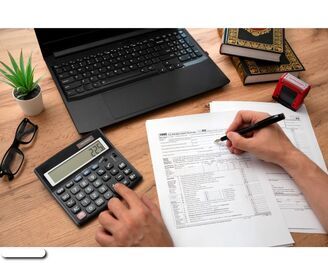
In direct taxes , the entity that bears the tax burden (consumer or entrepreneur) is also the one who pays the tax liability to the budget. They can be different depending on the subject of taxation, for example, income or property. Direct taxes can also go to the central or local budgets. The two main types of direct taxes that go to the central budget are the corporate tax and the personal income tax. This category also includes taxes withheld at source, as well as taxes on expenses, but they are more specific.
Corporate tax
The corporate tax or the tax on the profit of legal persons is regulated in the Corporate Income Tax Act (CIT Act). In general, profit is equal to the positive difference between income and expenses. However, there are peculiarities and specific rules in its calculation, which is why this activity is usually performed by an accountant. When the difference is negative, the financial result is a loss.
The tax base for corporate tax is the profit formed during the calendar year, and the rate at which it is taxed is 10 per cent. The annual corporate tax due is submitted through the annual tax return – March 1 st to June 30 th of the year following the period to which it applies. By the end of this period, it must be paid.
According to the Corporate Income Tax Act, depending on the amount of their revenue, some organisations are required to make advance monthly or quarterly payments of their corporate tax based on the forecasted profit for the current period, while those with the lowest threshold of forecasted profit are exempt from this obligation. The payments for the due advance tax must be declared between March 1 st and April 15 th of the current year to which they apply. When the due annual corporate tax significantly exceeds the declared advance payments, interest is also owed on the difference.
It should be borne in mind that 10 per cent is the tax on the profit of the legal person. When it is distributed to the owners, a tax on dividend income is due, which is 5 per cent.
Personal Income Tax
The personal income tax is also a direct tax. It is regulated in the Personal Income Tax Act (PITA). The tax rate, as of 2025, is 10 per cent, and for sole proprietors it is 15 per cent. In this way, for sole proprietors it approaches the total amount of corporate tax (10 per cent) and dividends (5 per cent).
The tax base is the sum of various types of income, including those from: employment relationships, sole proprietorship activity, business activity, rent, transfer of rights or property and other sources. When forming the tax base, the amount of income is reduced by the amount of tax relief presented below in the text.
If a person has income only from employment relationships and will not use tax relief , they are not required to file an annual tax return. In almost all other cases, however, they must file one by the end of April following the year to which the declaration refers. Such cases are, for example: income from rent or non-employment relationships, use of tax relief, sale of property, taxation with patent tax, income from abroad, ownership of financial instruments of companies abroad, ownership of real estate abroad, activity as a sole proprietor, etc.
Just like with corporate tax, advance payments are due on the income of individuals. If the payer of the income is a legal person or a self-insured person, the obligation to pay and declare is theirs, not the recipient of the income. However, if the recipient is a self-insured person or the payer of the income is an individual, then the recipient is obliged to submit a declaration for advance payments (under Art. 55 of the Personal Income Tax Act).
A tax return (under Art. 50 of the Personal Income Tax Act) can be submitted on paper and electronically on the NRA portal via the Personal Income Tax Account. If the return is submitted electronically, a 5% discount on the amount of tax due can also be used. However, three more conditions must be met – a person must not have any public obligations subject to enforcement, the return must be submitted by the end of March, and the tax must be paid within the same period.
Failure to submit a tax return is punishable by a fine or a property sanction. Submitting false data that results in a lower tax is punishable by a fine. Each of the two fines may be doubled in the event of a repeated violation.
Tax Relief for Natural Persons
Tax relief represents a reduction of the tax due. The Personal Income Tax Act (PITA) provides for a reduction of the annual taxable base through tax reliefs under various circumstances. To take advantage of these, certain conditions must be met, which you should research in advance, and accordingly, Form No. 10 must be completed and attached to the annual tax return. Tax reliefs may only be used if you have no public obligations subject to enforced collection as of the date of submission of the annual tax return. You may use the following reliefs :
- Reduced working capacity – tax relief is granted to individuals with 50% or more reduced working capacity and provides the opportunity to reduce their taxable base. This tax relief may be applied for the year in which the incapacity occurred, as well as for the year in which the validity period of the expert decision – issued by a competent authority and determining the reduced working capacity - expires.
- Personal contributions for insured length of service upon retirement – it applies to personal contributions made for the purchase of insured length of service for retirement. Individuals can reduce their taxable base by the amount of social security contributions they have personally paid during the year to acquire insured length of service for retirement, in accordance with the procedures set out in the Social Insurance Code.
- Donations – the tax base is reduced to varying degrees, depending on the purpose and the entity in favour of whom the donation was made.
- Young families – under certain conditions, people under 35 years of age have the right to use tax relief for young families. The relief allows for a reduction of the taxable base by the interest paid - up to a specified amount - on a mortgage loan taken for the purchase of a sole family residence.
- Children – allows for a reduction of the taxable base by providing relief for children under the age of majority, in varying amounts depending on whether there is one, two, or three or more children, effectively reducing the tax due.
- Children with disabilities – the relief for raising a child with a disability of 50% or more, determined by a decision of a competent authority, effectively reduces the tax due. In practice, this amount is double the relief for children and has no maximum limit.
- Cashless payments – a specific relief requiring 100% of taxable income to be received via bank transfer and at least 80% of the income to be made through cashless payments. The relief allows for a reduction of the tax due by 1%, but not exceeding a specified cap.
- Improvements and/or repairs of real estate residential property – the relief allows local and foreign individuals who are tax residents in a European Union member state or a country in the European Economic Area to deduct from the taxable base the payments made during the previous year for labour related to improvements and/or repairs of a single real estate residential property, up to a specified amount of the taxable base, when the repair is carried out on a real estate residential property in Bulgaria owned by the liable person, provided certain conditions are met. One of these conditions is the submission of documents proving the amount paid for labour. The relief cannot be used for income from business activity as a sole proprietor.
If necessary, check the current rates of taxes and tax reliefs in the relevant legal documents.
Useful links:
 This article has been prepared with the support of the OECD, as part of the project "Strengthening the Capacity for Implementation of the National Financial Literacy Strategy", funded by the EU through the Technical Support Instrument. This material is for informational and educational purpose only. It does not constitute investment advice, a recommendation or offer to buy or sell financial instruments, or the provision of any other type of investment services. More information can be found here.
Useful instruments
Glossary
Partners