Types of investments
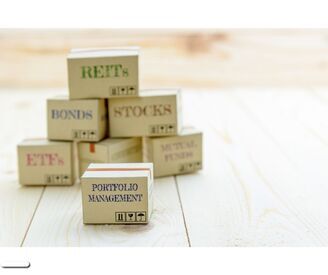
Do you want to finance your life goal and secure your financial future? Investments are a way to achieve what you desire, especially when it comes to longer-term goals. Often the question is how to navigate the sea of investment opportunities that you can choose from, combine, and arrange according to your personal priorities. The first step is to familiarize yourself with the essence of the different types of investments – what return on investment can be expected from them, and what risks they carry. Remember, the wise approach is not to invest in something you do not understand.
The world of investments is truly diverse. Among the most popular types of investments are:
- Real estate – residential properties and agricultural land
- Securities – stocks and bonds
- Units in investment funds
- Peer-to-peer and crowdfunding platforms
- Crypto-assets
- Gold and precious metals
- Collectibles
- Business
What do these main types of investments represent and what is their return on investment?
1. Real Estate
Real estate investments are among the most preferred by Bulgarians. Owning property is associated with cultural and social values. Many people perceive their own home as a form of long-term security, as well as a symbol of success. Unlike directly purchasing a home to live in, investing in real estate has a different goal – generating returns through rental income and possibly increasing the value of the asset over time.
Investing in real estate requires substantial capital, often involving mortgage loans, as well as time for finding a suitable property and completing a transaction. This distinguishes real estate from more liquid assets such as stocks and bonds, which are easier to trade and do not require the same level of commitment and maintenance.
A property to meet housing needs or an investment property
A personal residential property is intended for private use and typically does not generate regular financial returns. It provides housing security and comfort and does not require active management efforts. Its value may increase over time, but that is not the main reason for acquiring it.
On the other hand, an investment property is acquired with the intention of achieving a return on investment through appreciation in value and/or income from rent. Investors often rent it out or prepare it for future resale for profit. In this case, it is important to evaluate factors such as local demand, rental levels, and the stability and profile of tenants. Maintenance and management costs, as well as different tax treatments, must be considered when making an investment decision. Moreover, a property not intended for residential use is subject to different and higher tax treatment than a home used daily.
Investment in agricultural land
Agricultural land investments generate profit in two ways – through rental income and an increase in the land’s value over time, respectively, profit from its sale. The size of the rent depends on many factors such as location, area, fertility, types of crops, and the presence of other tenants.
Special Purpose Investment Companies (REIT-equivalents)
You can also invest in real estate without needing substantial funds. An alternative to direct property purchase is Special Purpose Investment Companies (SPICs) . In these, funds collected from multiple investors are invested in real estate. Their profiles can vary – investing in residential buildings for rental purposes, warehouses, agricultural land, office buildings, shopping centers, etc.
A specific feature of SPICs is that their shares are traded on a regulated market , in Bulgaria this is the Bulgarian Stock Exchange. According to the Special Purpose Investment Companies and Securitization Companies Act , SPICs are required to distribute 90% of their profits in the form of dividends. They are suitable for small investors seeking regular passive income. The international equivalent is Real Estate Investment Trusts (REITs) , but the key difference is that SPICs are publicly traded companies, making it easy for investors to buy or sell shares.
2. Securities
Securities or financial instruments are written documents that materialize property, debt, or other rights upon presentation. Depending on different classifications, they vary in type, and when issued in electronic form (dematerialized), they can be traded on a regulated market. They are financial tools through which the investment of funds is carried out. Dematerialized securities are recorded in a central securities depository, in Bulgaria, this is the Central Depository AD . These include shares in public companies, corporate bonds, government and municipal securities, and other financial instruments.
Shares
Shares represent a certificate of ownership in part of the capital of a joint-stock company, and buying them essentially means acquiring ownership. As a shareholder , you have a number of rights – property and non-property. Property rights include the right to a dividend , a liquidation share, and the right to subscribe to a proportional share of new shares when the company increases its capital. Non-property rights include the right to participate in the general meeting of shareholders, to vote, and to receive information.
A popular way to invest in shares is through purchase on regulated markets . Companies whose shares are traded on regulated markets meet high listing standards. They regularly disclose investor-relevant information and follow strict transparency and data reliability requirements. This allows investors to rely on a higher degree of credibility in the reports and analyses of the companies they invest in.
Trading on a regulated market, such as the Bulgarian Stock Exchange, provides higher liquidity, transparency, and clear visibility of market prices.
Income from shares can be realized in two ways – through dividends and capital gains, which are the difference between the purchase and sale price of the shares.
An advantage of investing in shares and other financial instruments (government securities, fund units, etc.) is that if purchased on regulated markets in the EU, capital gains are tax-exempt. However, dividend income is taxed at 5% at the source in Bulgaria.
Shares can also be purchased on trading venues other than regulated markets. One such venue is the Multilateral trading facility (MTF) . It resembles a regulated market but has lower listing requirements. MTFs still comply with transparency and data reliability rules.
Bonds
A bond is a debt financial instrument with fixed income. When you buy bonds, you are lending money to the issuer – a joint-stock company or the state – and become a bondholder. Like any loan, it comes with certain repayment terms – the amount of the loan (bond value – principal or nominal), maturity, interest rate (coupon), and payment method.
- Corporate Bonds
When a public company needs capital, it can raise it not only through shares but also by issuing corporate bonds, which are dematerialized. In liquidation or financial difficulties, liabilities are repaid first, meaning bondholders are compensated before shareholders. Therefore, bonds are considered less risky investments than shares. Corporate bonds can be secured or unsecured.
Secured bonds are guaranteed, usually with assets like real estate or equipment. If the company fails to meet its obligations, these assets can be sold to recover the bondholders' money. Unsecured bonds are not backed by specific assets and rely on the company’s revenues and creditworthiness. Since they carry higher risk, they typically offer higher returns. - Government Securities
Government securities (GS) are issued by the government and are among the safest investments, as the risk of state insolvency is minimal. Therefore, the expected return is lower compared to stocks and corporate bonds.
The price of GS is directly influenced by central bank policies. When the central bank raises its base interest rate, new GS issues offer higher returns, leading to a drop in prices of existing bonds with lower rates. Conversely, when the interest rate is lowered, demand for existing GS with higher rates increases, raising their price. This dynamic is part of monetary policy and directly affects the bond market. Due to the introduction of a currency board in Bulgaria in 1997, the central bank’s monetary policy is limited. - Municipal Bonds
Municipal bonds are debt securities issued by local authorities, typically in connection with financing major infrastructure projects.
3. Shares in Investment Funds
Shares in Investment funds are financial products that allow you to invest your available funds. In such funds, the money of many investors is pooled together and managed by professionals with the aim of achieving maximum returns, taking into account the level of risk tolerance.
Shares in Mutual Funds
Mutual (contractual) funds are collective investment undertakings that are established and managed by licensed management companies . Their activities are regulated by the Financial Supervision Commission (FSC) or by the respective regulatory authority in the European Union country where the company is based. A list of licensed management companies established in Bulgaria can be found on the FSC website .
Mutual funds are always created with a clear strategy and have a defined risk profile – high-risk, low-risk, or balanced. They can have various sectoral and geographical profiles, thus seeking to cover the preferences of different types of investors.
Investing in a mutual fund means to purchase shares in it. A share represents an equal part of everything the fund owns, and its value is determined according to the rules for asset valuation of the fund. Accordingly, its value generally varies depending on the market performance of the individual assets included in the investment portfolio. Information on share prices is available on the websites of the management companies.
Investment in mutual funds offers several advantages:
- Easily accessible for small investors and allows for regular investments with small amounts.
- Enables risk management through diversification of the investment portfolio.
- Highly liquid – you can always offer your shares for redemption to the respective management company and receive your funds within a few days.
- Returns from the investment are not subject to taxation.
- The funds are managed by professionals.
Exchange-Traded Funds (ETFs)
Exchange-traded funds (ETFs ) are collective investment undertakings that track the performance of a specific market index, commodity, currency, or another financial asset and are traded on the stock exchange similarly to shares.
They are characterized by passive management, meaning they do not follow active investment strategies but most commonly replicate a given index, economic sector, asset, or exchange-traded commodities such as precious metals, fuels, food, etc. For this reason, their management fees are relatively low.
There are also more complex exchange-traded funds whose prices may increase in falling markets or may not exactly reflect the movement of the underlying asset (actively managed ETFs).
4. Peer-to-Peer and Crowdfunding Investment Platforms (P2P and Crowdfunding Platforms)
Peer-to-peer lending and crowdfunding platforms allow a large number of investors to lend money directly to other individuals or businesses online, without the involvement of traditional financial institutions such as banks.
These platforms facilitate the process of connecting lenders and borrowers by offering various terms and interest rates depending on the risk of the loan. P2P investments are often attractive to investors due to their higher potential returns compared to regular bank deposits, but they also carry greater risk, as they lack the same protections.
In this way, P2P and crowdfunding platforms create greater financial flexibility and accessibility for both investors and those seeking funding.
5. Crypto assets
Crypto assets are digital representations of value or rights. They can be transferred and stored electronically through distributed ledger technology (DLT) or similar technologies. A well-known example is blockchain technology . Imagine blockchain as a public ledger where all transactions with a given currency are recorded. Unlike a traditional ledger, blockchain is open to all participants, ensuring transparency and security of exchange.
Crypto assets are used as a means of payment (also referred to as “ cryptocurrencies ”). Cryptocurrencies allow transactions without the mediation of traditional financial institutions, which is one of the reasons for the growing interest in them. On the other hand, the absence of mediation and control increases the risks associated with money laundering and illicit transactions. They are not guaranteed (or backed) by any central bank, unlike traditional currencies, and are therefore also referred to as virtual currencies.
The main cryptocurrencies include Bitcoin, which is the first and most widely used cryptocurrency, Ethereum (ETH), Ripple (XRP), and Litecoin (LTC). Each of them has its own distinctive features.
Crypto assets can be used for investment purposes (e.g., to provide ownership rights), as well as for access to goods or services (similar to vouchers, also known as “utility tokens”). Along with the potential for high returns, crypto assets are known for their high volatility , which makes them a risky form of investment.
To address the risks to financial stability and monetary policy associated with crypto assets and to ensure more adequate protection for consumers and investors in the crypto asset market, the European Regulation on Markets in Crypto assets (MiCA) was adopted in 2023. In Bulgaria, its provisions are implemented through the Crypto Asset Markets Act . According to the law, the FSC and the Bulgarian National Bank will be the state authorities responsible for regulating and supervising the crypto market in Bulgaria for certain crypto assets.
6. Precious Metals
Precious metals such as gold, silver, copper, platinum, and others from this group are known for their resistance to corrosion and oxidation, which makes them important raw materials with high economic value. Like any other investment, they have their pros and cons.
Gold
For centuries, gold has been considered a safe haven during periods of economic uncertainty, and its liquidity is high. Investment gold is that with a fineness of over 994 thousandths, and coins with such status must have a pure gold content of over 899 thousandths and be minted after 1800.The demand for gold is influenced by both commercial uses, such as jewellery production and use in technological components, and by several key psychological factors. These include fear of inflation, which drives people to buy assets that preserve value; geopolitical turmoil and conflicts, which increase uncertainty; and concerns about financial stability when economic conditions undermine confidence in other investments and currencies. The price of gold is also determined by the level of demand from central banks seeking to replenish and diversify their reserves.
Silver
In Bulgaria, investment silver is considered an industrial, not an investment metal. For this reason, its sale is subject to value-added tax (VAT). However, individuals selling it cannot charge VAT, which results in an automatic loss of value equal to the tax rate (currently 20%).
7. Collectibles
Collectible items such as paintings, coins, or antiques may be of interest to investors mainly because of the expectation that their value will increase over time. Recently, some luxury goods – such as cars, watches, or handbags – have also begun to be recognized as collectibles.
8. Business Investments
Investing in your own or another business can be highly profitable, but it also carries significant risk. The success of the investment depends on a number of factors such as market demand for the product or service, the competitive environment, financial management, and operational execution.
Investing in your own business requires time, effort, and commitment but also provides greater control over the development and management of the company.
Investing in someone else’s business may involve acquiring equity by purchasing shares/stakes or entering into partnerships with other entrepreneurs. Equity investments offer the potential for high returns, especially in successful startups, but they are also exposed to considerable risks, such as market changes and unpredictable economic conditions.
Whether investing in your own or someone else’s business, the decision requires thorough research and careful evaluation of the associated risks and growth opportunities.
Useful links:
Financial Supervision Commission
Special Purpose Investment Companies Act
European Regulation on Markets in Crypto assets (MiCA)
European Regulation on Market Infrastructures
 This article has been prepared with the support of the OECD, as part of the project "Strengthening the Capacity for Implementation of the National Financial Literacy Strategy", funded by the EU through the Technical Support Instrument. This material is for informational and educational purpose only. It does not constitute investment advice, a recommendation or offer to buy or sell financial instruments, or the provision of any other type of investment services. More information can be found here.
Useful instruments
Glossary
Partners