Before I take a loan/credit
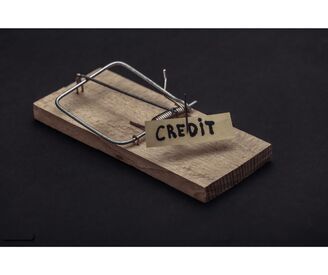
Have you ever borrowed money from friends or lent money to someone? Maybe you’ve even had problems paying it back. This is also common in the work of banks or non-banking financial institutions , as people sometimes find it difficult to repay their debts. That’s why it’s important to know from now on how to make wise decisions when it comes to credit.
Credit is a sum of money granted by a bank or non-banking financial institution that must be repaid within a certain period with interest. The terms of the loans – interest rates , terms and other fees – are different, as well as the purposes for which they are taken. For example, a consumer loan can be taken out for a home renovation, a commodity credit for goods on installments, a mortgage loan for a home purchase, and a student loan to finance education. A type of credit is also the so-called overdraft on a current account and debit card , which can be used within a specified limit.
Some credits offered by non-banking financial institutions have simplified application conditions, low-income requirements, and very short time approval. These are the so-called payday loans . Usually, the amounts granted are small and the interest rates high.
What is important to know before using credit?
There are several important questions that you need to clarify when you consider taking out credit in the future. The first is what the interest rate and repayment period are, as this will determine how much you will repay and what monthly installments you will pay. You should also consider additional fees, such as processing fees, etc., that are added to the amount withdrawn. Realistically assess whether your available income will allow you to cover your expenses after the loan installment is paid. It is also important to find out if there are any penalties – for example, for delayed payment.
You already use a debit card, but once you reach the age of majority and have provable income, you can also have a credit card . This is practically a type of revolving credit for which you will not owe interest if you repay the amount used within the grace period set by the bank.
A credit card used wisely can be a useful tool for starting to build a credit history and forming your credit rating . It is an assessment of your creditworthiness, i.e. how reliable you are in repaying loans. Its calculation takes into account what and how many loans you have had or currently have, how you repay them, whether you have a credit card and what you owe on it compared to its limit, what movable and immovable property you own, etc. Therefore, it is important to manage your debts responsibly, as this will increase your credit rating. Thanks to this, you will be able to get better credit terms in the future with a lower interest rate or a higher credit card limit. On the other hand, if your credit score is low, you may even be denied credit.
What are the pros and cons of getting credit?
Like any financial instrument, using credit has its pros and cons. It is definitely not a good idea to take out amounts that you cannot repay, because you will end up in over-indebtedness . Often in such cases, people take out a new loan to repay the previous one, then a new loan, etc., and fall into the so-called " debt spiral ". Taking out a new credit for such a purpose is justified only if the terms are better than the first one. This is called " refinancing a loan ".
Another disadvantage is related to possible too high interest rates, which will increase repeatedly the amount to be repaid. In other words, if you buy a product on installments, you will pay much more than the real value of the product.
The inability to repay the loan regularly and to make installments will worsen your credit rating, which will adversely affect future loans.
It is also important to note that for some people, debt can create psychological pressure and lead to stress, especially if they become over-indebted.
On the other hand, loans are a useful tool when used wisely and in the right situation. They can help in emergencies, such as urgent repairs, or for investing in the future - such as university education or starting a business. With their wise management, a good credit history is built, which is useful when applying for future large loans, such as buying a home or a car.
However, if you want to buy something that is not urgent or really necessary, it is better to save. Especially if the interest rate on a possible loan is high and you will pay much more than if you wait to collect the necessary amount.
Some tips that will be useful when you consider before taking out a loan:
- Take out a loan only if you really need it.
- It is better to postpone the purchase and save, rather than take out a loan with a high interest rate, which will increase the price of the product.
- Do not take out a loan for goods and services that you cannot afford and that are not essential if you do not have the funds for them.
- If you have decided to take out a loan, get detailed information and compare the terms offered by different banks or non-banking financial institutions.
- Pay your installments regularly and on time, this way you will maintain a good credit rating.
- Treat loan installments as one of the priority expenses in your budget.
- Avoid loans with excessively high interest rates and other unfavorable terms, if possible.
 This article has been prepared with the support of the OECD, as part of the project "Strengthening the Capacity for Implementation of the National Financial Literacy Strategy", funded by the EU through the Technical Support Instrument. This material is for informational and educational purpose only. It does not constitute investment advice, a recommendation or offer to buy or sell financial instruments, or the provision of any other type of investment services. More information can be found here.
Useful instruments
Glossary
Partners