Household finances
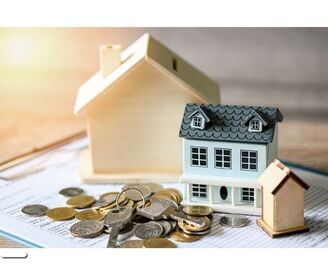
Living paycheck to paycheck, with no savings and the hope that no unexpected expenses arise – it does not sound ideal, but it is a very real-life scenario. Of course, no one wishes to be in such a situation. The solution lies in taking control of your finances, creating a management plan, and sticking to it.
When discussing household finances, people often assume this refers mainly to everyday living expenses. In reality, the financial life of a household—whether that means an individual or a family—includes all aspects of personal finance: managing everyday expenses, debt, savings and investments , insurance protection, tax planning, and inheritance planning. To feel at ease in the present and confident in achieving your goals, it is important to have a financial plan (see more on the topic in article “ Financial Planning ”). The main tool through which you implement your financial plan in practice is the budget . It allows you to manage the balance between income , expenses , and payments, and to allocate funds toward your goals (see more on the topic in article “ Budget ”).
Here are some tips to keep in mind when creating your household financial plan and budget:
- Income: Structure and Amount
Your household income is the foundation of your financial plan and budget. It may come from various sources—salaries, freelance work, bonuses, rental income, and others—and at different frequencies. List all sources to gain a clear picture of their size and regularity. Check whether and how you can increase your disposable income by using tax deductions applicable to your life circumstances. Naturally, it is always good to seek opportunities to increase your income. There are many options—getting a second job, starting a side business, or switching to a better-paying position.
- Expenses for Living and Household Needs: Review and Optimization
These may include all kinds of costs — for food and supplies, home maintenance, utilities and other services, transportation, clothing, health and fitness, education, entertainment, and more. If you find yourself unsure where your money is going, you need to track its “path.” Write down all expenses, even small ones, for at least a month. Analyzing this data will help you identify problem areas, categorize expenses correctly, and optimize them. Even if you are not currently experiencing financial difficulties, it is still wise to look for ways to reduce expenses. Here are just a few ideas:
- Review contracts for various services and subscriptions—e.g., mobile providers, internet, financial services, gym or hobby memberships. Cancel those you do not use if possible, and try to negotiate better terms for the ones you need.
- Consider how to reduce your utility bills—electricity, water, heating. You might reduce usage, make energy-saving upgrades to your home, and use energy-efficient appliances.
- Shop wisely and plan ahead: research market offers when planning larger purchases, shop with a list, take advantage of promotions and discounts. Limit impulsive shopping —for example, introduce a "reconsideration" period.
- Optimize your entertainment and travel expenses.
- Debt Servicing
A significant portion of your income may go toward loan payments and other debts. Create a separate category for these in your budget—this way, it will be easier to track any changes in your debt level relative to your income and to take timely action if a problem arises. Even if you are managing your debt well, it is advisable to look for ways to optimize repayment costs through refinancing , early repayment , and more (see more on the topic in article “ Debt Management ”).
- Savings and Investments
If the categories above relate to current consumption, this one is forward looking. When you save, you set aside a portion of your income and reduce present consumption so that you can achieve your life goals in the future. Creating and maintaining an emergency savings fund is essential for your financial stability. After that, you can start accumulating funds for other goals—whether short- or long-term—using the appropriate savings (see more on the topic in article „ Forms of savings and saving products “) or investment (see more on the topic in article „ Types of Investments “) tools for your needs.
- Insurance Protection
Consider how a serious event—related to your life or health, your property, or the consequences of your actions—could severely impact or even destroy your household financial stability. That is why it is crucial to have insurance coverage that is appropriate for your life circumstances. Insurance helps you cope with financial losses due to unforeseen events. Carefully assess the possible risks to your household and choose the insurance solutions (see more on the topic in article „ Choosing an insurance policy “) that best meet your needs.
Household Budget
Once you have a clear picture of the different aspects of your household financial life, proceed to create a budget that reflects them. It is a good idea to make a list of major annual expenses —such as local taxes and fees , family vacations, home renovation, vehicle maintenance, major family events, and others. Think about the most practical way to fund them and adjust your budget accordingly.
One of the most commonly given pieces of advice when budgeting is to apply the “ pay yourself first ” rule. This means setting aside a portion of your income for savings/investments before allocating the rest for current expenses. This approach not only encourages saving but also helps prevent overspending and ensures your financial goals are central to your daily decisions. How you keep your budget is up to you—it may be on paper, via a mobile app, or in a spreadsheet. There are also different budgeting methods. Some people prefer detailed expense categorization, while others use variations of the “50–30–20” rule. Under this model, household funds are divided proportionately into three main categories—essential expenses, discretionary expenses, and savings/investments.
Regardless of the method you choose, you should regularly review and adjust your budget to reflect changes in income, expenses, or financial goals. Doing so gives you a clearer picture of your financial health and helps you navigate financial challenges more easily.
It is also a good idea to automate at least part of your payments. This will not only save you time and effort but also reduce the risk of missing or delaying payments. Apply the same principle to the amounts you set aside for savings and investments, so you are not tempted to spend them on something else.
 This article has been prepared with the support of the OECD, as part of the project "Strengthening the Capacity for Implementation of the National Financial Literacy Strategy", funded by the EU through the Technical Support Instrument. This material is for informational and educational purpose only. It does not constitute investment advice, a recommendation or offer to buy or sell financial instruments, or the provision of any other type of investment services. More information can be found here.
Useful instruments
Glossary
Partners